

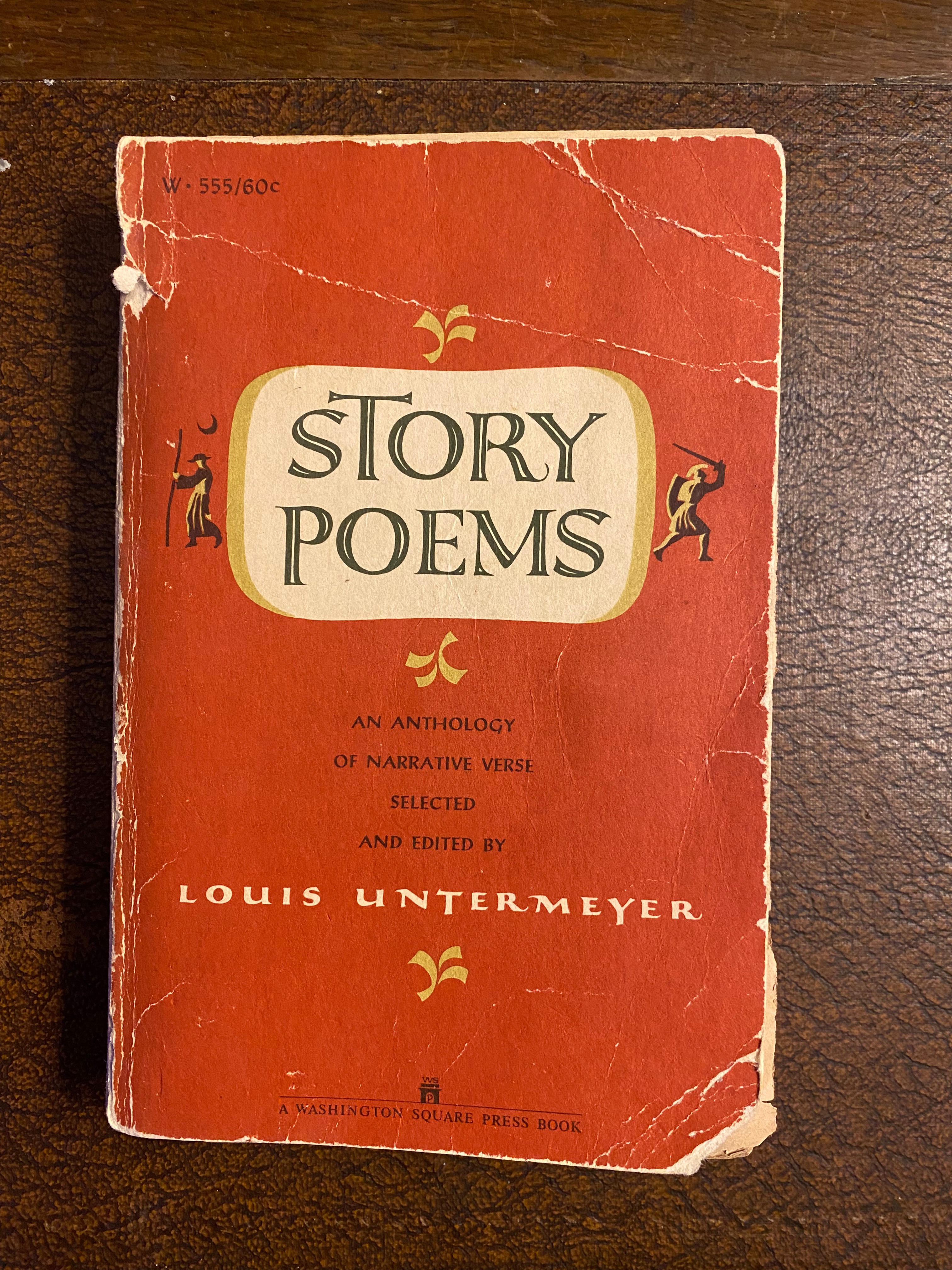


The America-only fundamentalist “Bible-based” curriculum I had in school did more to inflame my love of the Romantic than it did to make me a cookie-cutter Duggar or Douglas Wilson wannabe. Unlike the stale and often repressive presentation of America as continuing the covenant of Israel — or, more worryingly, as an instrument of the rapture — the medieval world was filled with magic, mystery, and romance while still giving place to reason, logic, and the business of living.
To a little girl who loved to write about escape and true love, medieval ballads like “True Thomas” were a banquet to a starving imagination in a cold religion that tried to strangle out all magic, all mystery, and all feeling. Feelings themselves weren’t exactly viewed in a good light — the dogma of that particular church was that God didn’t have feelings like humans, and any suggestion of such was sacrilegious if not outright blasphemy.
But the medieval world was different, offering a much richer tapestry of reality where God was part of the warp and weft and where emotions were part of the ongoing creative effort, not a curse. Looking back, I think it was my literary connection to the medieval world that kept one small spark of me still living before I finally left the cold religion of my childhood behind once and for all.
When I came to Romance, and by extension Romantasy, it was from the yellowed pages of Story Poems — a little paperback that even now opens almost immediately to “True Thomas.” Most of those stories were medieval ballads that told of true love, of lovers running away to be together and never being separated even in death. My love of those ballads eventually, by way of Arthurian legend, brought me to The Faerie Queene.
Spenser represented for me the literature that was only not forbidden because it was old and it was Protestant. In a subculture that saw non-existent Satanism in Harry Potter and questioned C. S. Lewis’ faith for including witches in The Chronicles of Narnia, reading The Faerie Queene was an act of rebellion, even if it wasn’t forbidden in my own family.
Little did I know how much of a rebellion it would turn out to be.

Seeing Romantasy Through Classical Literature
My first true foray into Romantasy wasn’t A Court of Thorns and Roses. In fact, had I stopped there, I probably never would have bothered with Romantasy again. I’d tried reading that particular novel twice and didn’t find it compelling enough to continue.
Picking up When the Moon Hatched by Sarah A. Parker, however, made me fall in love with Romantasy — and, ironically, had me finally finishing the entire Thorns and Roses series in record time.
The cover was what initially drew me in — mystical, delicate, and ethereal. The moonplume looked more like an Asian dragon, or the luck dragon from The Neverending Story, than the usual European-inspired dragons gracing the covers of Fourth Wing. Then I flipped open the cover and started to read — and the words sang like the epic poems and ballads I’d loved as a teenager, like Tolkien’s prose. Parker, unlike too many writers today, took the time to describe the world. And what a world it was.
This was a novel with serious world-building and a love story that spanned centuries — even overcoming death and memory itself. I was enraptured in a way I hadn’t felt since devouring The Count of Monte Cristo.
What really convinced me of its literary worthiness, however, was Sarah A. Parker’s treatment of personal history and identity. When we meet Raeve, she is her own complete person — and she was also, once, Elluin. Her inner and outer journeys aren’t just a search for who she is and for revenge, but for who she was and what she lost. Her past self as Elluin is just as important as her current identity as Raeve — more so since Elluin gave birth to a daughter before her death.
This speaks to very different themes from your standard romantic fare. This is a novel about lost identity and the struggle to maintain love and family when the entire world is actively searching to rip both apart — not entirely unlike the modern world in which we find ourselves. But unlike a lot of Modernist literature that wallows in misery for its own sake, the misery in When the Moon Hatched only serves to spur the protagonists forward. Raeve may be miserable, but she uses her misery to remove as much of it as she can from the world.
Delving further into Romantasy, you find similar weight in Fourth Wing, in A Court of Thorns and Roses, in Quicksilver. These are not flimsy stories with relationships as window dressing. These are stories with thematic heft that hold up against the realism and naturalism of the late nineteenth and twentieth centuries. I would even go so far to say that many works that carry the name “Romantasy” hold their own in the great Romantic literary tradition to which Edmund Spenser’s The Faerie Queene belongs.
One of the great problems with literature, especially from the turn of the century through the mid-twentieth, is the rise of anti-structuralism and stream-of-consciousness writing. The works that came from both movements form the backbone of classical studies across the United States — and they are also some of the most difficult and uncommunicative works ever written. Ezra Pound’s cry of “make it new” ended up becoming a cry to “make it so that no one can understand it” and then call them unintelligent if they can’t. You can address great universal themes all you want, but if your reader has to slog through thousand-word sentences to reach them, you won’t have much of an audience unless it’s a captive one. This is part of the reason Romance and Romantasy have become such a powerhouse. Both communicate clearly. You may wonder what happens next, but you never wonder what just happened.
Re-Reading The Faerie Queene and Finding Romantasy
Last year I picked up a little paperback called A Preface to The Faerie Queene by Graham Hough, and it sent me back to Spenser with fresh eyes. Lo and behold — many of the same things that make Romantasy compelling stared back at me from the pages.
The Faerie Queene is unfinished and, in the Penguin Classics edition, runs to 1,246 pages including notes and glossary. We don’t actually know the form it was originally meant to take, and the letter Spenser wrote to Sir Walter Raleigh explaining his intention doesn’t necessarily fit the work as we have it. What’s more likely is that the letter is a protective cover for a work that had to endure extreme scrutiny from both the established church and the Puritan factions trying to gain control of the government. Like now, there were purity tests for literature and artistic endeavor. Any whiff of Catholicism and Spenser’s head would have been sundered from his shoulders faster than he could protest his innocence.
The allegory, according to Graham Hough, is incidental — meant to be picked up and put down at will, not, like Dante, the backbone of the piece. This makes the poem more approachable than its reputation suggests. So, like any modern Romantasy series, you have to take The Faerie Queene as it is and not as you want it to be — and it doesn’t disappoint. The longing, the pain, the suffering, the full range of emotions are all there, just as they are with When the Moon Hatched.
There is even a female knight called Britomart who rides out in search of her true love Artegall — the one knight she cannot defeat. Britomart is supposed to represent chastity, which carries some very negative connotations to our twenty-first century sensibilities. But Spenser’s version of chastity is not an abstinence-only waiting game. His chastity carries with it the expectation that desire will be fulfilled at the right time, by the right person — not as something predestined, but as something you go out and actively seek. Britomart may have seen Artegall in a magic mirror, but she has to pursue him. He does not come to her.
It’s a narrative that has the surface appearance of familiarity to purity culture’s “true love waits” mantra — but it’s anything but.
True love doesn’t wait. It hunts down, defends, and actively pursues the thing it needs to be fulfilled. It doesn’t sit at home tending younger siblings, just waiting on a man to make a decision for you, and it doesn’t passively sit by while all life and the world moves on without you. And in that sense, Britomart and Raeve are sisters across five centuries of literary tradition, even though Britomart doesn’t suffer the same traumas as Raeve.
The irony is that The Faerie Queene was systematically removed from education after the Victorian era. There used to be nursery editions that retold, in prose, the basic stories of each of the knights. Now you’re lucky to read past the Redcrosse Knight’s battle with Error, if that. It was still part of my high school curriculum — but that is well over twenty years ago.
Now? Now it’s time for the generations robbed of it to explore again. The Faerie Queene is yet again an act of rebellion and one which I hope more lovers of Romantasy will take.
What does “Eftsoons” mean?
Eftsoons means again, shortly after, a return.I think modern Romance is: not a departure from the literary tradition, but a return to it. A return that the critical establishment has been remarkably reluctant to acknowledge — and in the inaugural issue of The Eftsoons Romantic, I intend to explore exactly why.
Not ready for the financial commitment? Scroll down and subscribe to my weekly free newsletter instead!
Subscribe to The Eftsoons Romantic

The Eftsoons Romantic is a monthly paid newsletter featuring more in-depth topics on High Romance and the Romantic art form, book reviews, craft insights, and more!
Digital: $12/month; $100/year

Leave a Reply