
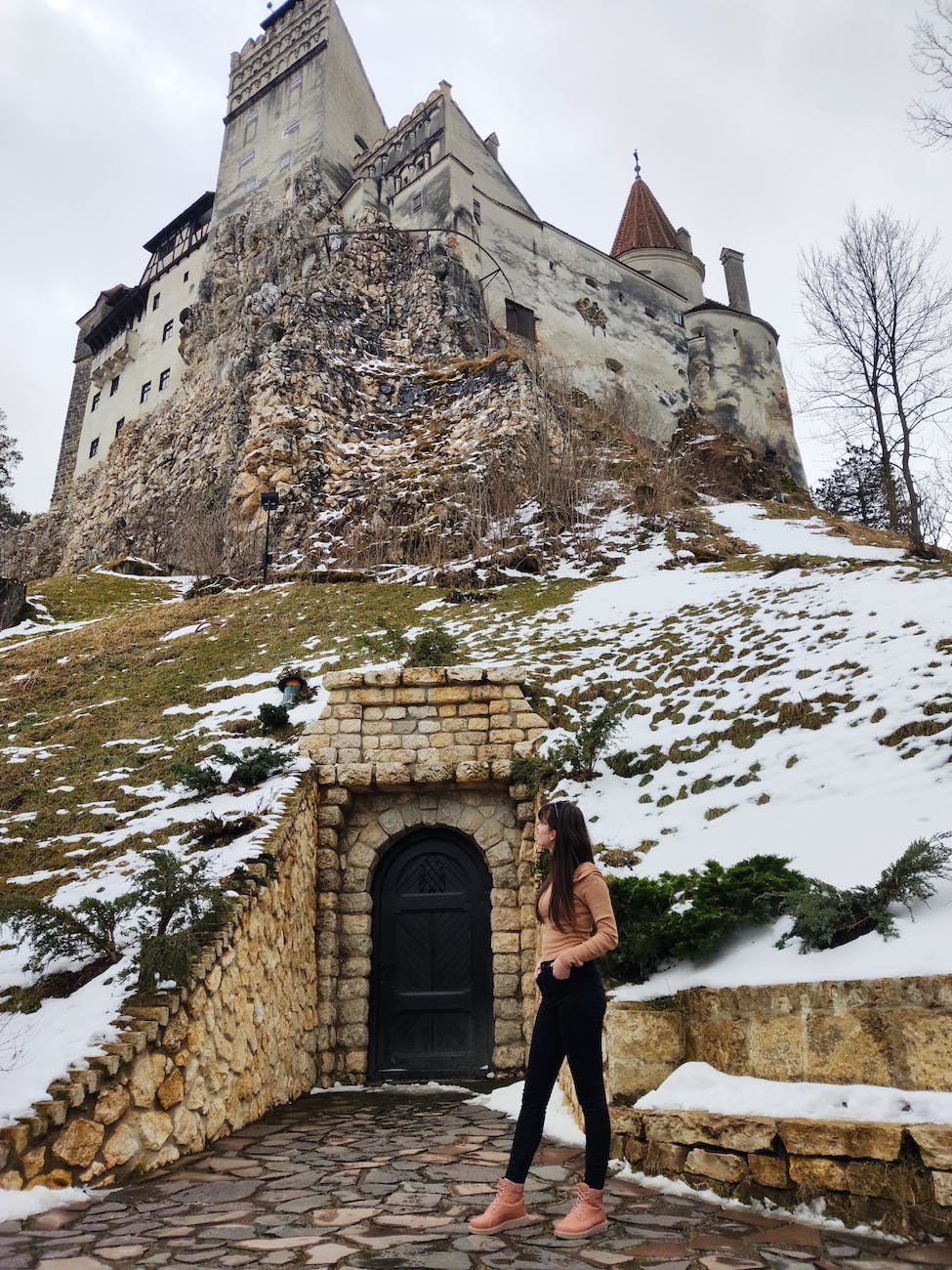
A blog post about any work of literature remotely Gothic will inevitably involve subverting the family unit. A look at the earliest Gothic novels such as The Castle of Otranto or The Mysteries of Udolpho has orphans and dysfunctional families as their main characters. Dysfunctional families looked a little different, but they weren’t anywhere near the solid “nuclear” family society has always preferred.
Central to this theme is usually the inadequacy of the biological father to prepare their children for the evils in the world. Think Maurice or the Sultan in the animated version of Disney’s Beauty and the Beast and Aladdin. This is nothing really all that new. Failed fathers abound in literature from Polonius in Hamlet to any modern-day “romantasy” books available on Kindle Unlimited.
Even Jane Austen explores the idea of failed fathers in her books—something which the more ultra-conservative proponents of her works often overlook. Read any of her novels and you will find fathers who are unwilling, inept, or too prideful in their own status to do anything to ensure their daughters are safe and provided for in society.
Later on, when you get into actual horror literature like Shirley Jackson’s The Haunting of Hill House or Stephen King’s Carrie, the trope changes from the ineptitude of the father to the monstrosity that is an overprotective mother. This, as we’ll see, also occurs in Dracula, albeit to a far lesser extent.
In Dracula, we see a combination of these tropes converge in a most spectacular fashion. Too often, we’re distracted by the mere idea of a vampire to really look into the details in the novel that show us what the book is actually about. Is it about a vampire? Or is it about something else?
Gender-Bending Role Reversals
Dracula is his own servant, but a domestic self-sufficiency that charms many readers today may have looked evilly unmasculine, and thus inhuman to some Victorians
From the footnote in the 1997 Norton Critical Edition of Dracula
Today, we think of gender in many terms. Male, female, non-binary, etc. These may be helpful to some people to understand themselves, but it a concept we have to leave behind for a moment as we look at Dracula because if we don’t, it won’t make any sense. Even being nothing close to what some consider “gender affirming” in today’s language, a 21st century person will probably miss some details.
This is where the Norton Critical Editions really show their true worth. My edition of Dracula has footnotes by Nina Auerbach, a scholar in Gothic fiction in her own right. Those notes are a treasure in themselves because they point out some subtleties in the text any of us could miss.
For instance, when Jonathan Harker meets Count Dracula in Transylvania, he discovers Dracula doesn’t keep servants, or any domestic staff of any kind. Dracula instead does all the chores himself, although Jonathan doesn’t understand how he does this. Now, to a 21st century audience, this probably seems rather innocuous. Why shouldn’t a man do the dishes and cook dinner?
But this was not the case in Bram Stoker’s day. No man, especially a man with the title of a Count, would undertake domestic work if he had any dignity. Right away, we see Dracula taking up something “feminine.”
When Dracula later forces Mina to drink from him, he presses her to his breast—another traditionally feminine attribute.
Now, what we would make of this today is probably that there is an element of at least gender fluidity in Dracula. The Dracula Jonathan Harker meets in Transylvania is unnervingly feminine, even eyeing Jonathan up as a potential victim. In London, however, he goes after Lucy first and then Mina. He leaves the men, except for Renfield, alone.
Put into today’s context, it’s a detail that’s a little more intriguing than it is perhaps unnerving.
In its original context, however, this is part of Dracula’s monstrosity. He doesn’t observe the socially accepted natural order. Man at the top, woman subservient. Man does business, woman does housework and bears children. Dracula himself challenges all that. He creates children from his own blood, like an aberration of Jesus Christ’s Last Supper. He makes all his own domestic arrangements instead of employing a woman to do them for him.
Yet, like the proverbial rogue, he by-passes all the paternal safeguards put in place to keep both Lucy and Mina from him. In Victorian terms, he’s both masculine and feminine. It’s a characteristic we see crop up again in Anne Rice’s Vampire Chronicles.

Orphans Abound
We know precious little of anyone’s family in Dracula. Mina and Jonathan are orphans. Lucy’s mother is a widow. Arthur’s motherless and, not long before Lucy dies, fatherless too. We have a gaggle of people who have lost family or are without family entirely.
The family unit is already in disrepair long before Dracula ever reaches English shores.
Again, this is nothing new as far as the larger Gothic genre is concerned. The action begins when the family unit’s weaknesses come into play and ends when the family unit is restored.
For instance, Emily St. Aubert in The Mysteries of Udolpho goes off on her travels and endures her hardships when both her parents die and her father’s estate is practically bankrupt. The people who should have best helped her––her aunts and uncles––only pushed her around more and are the reason she’s put into danger. Her hardships end when she regains her inheritance and marries the man she loves.
In Dracula, we have the same thing. The action begins when Jonathan and Mina depend entirely on benefactors or employers, Lucy’s mother is taken seriously ill, and her fiance’s father is also on his deathbed. The action ends when a family unit: the Harker family unit comes into being with the birth of Quincey Harker, Mina and Jonathan’s son.
Now, this isn’t exactly subversive. It’s almost too conventional. At least, it is on the surface.
Personally, I think this exposes conventionality for what it is: convention is not protection.
The conventional nuclear family unit is not the answer for ultimate happiness, success, or anything else. Lucy and Arthur have perhaps the closest thing to anyone in the novel to a conventional family and Arthur’s father keeps him from being in London or from joining Lucy and Mina at Whitby when she first falls ill.
More disturbingly, Lucy’s ultimate downfall is thanks to her own mother. Her mother removes the protections Van Helsing puts into place, thinking “mother knows best.” Even more unfortunately, her heart is so weak she can’t even face up to the dangers surrounding her daughter. And, finally, she disinherits her daughter in her will and leaves it all to a man who isn’t even yet her son-in-law, assuming that the two were to be married and that would be the end.
Lucy’s own mother was no protection or haven. And Arthur’s father’s great contribution to the novel is that he dies and leaves Arthur with a very large estate.
Contrast this with Mina and Jonathan, who, both orphans, move up in the world not through their families, but through their hard work and perseverance. Mina takes up typing and stenography so she can be a help to Jonathan, but it turns into something that helps defeat Dracula in the end.
The family unit isn’t “everything” as we so romantically like to think. It’s not “all about family.” There’s a distinct theme here that it’s the individual who can ultimately make a difference. Families don’t fight monsters. Individuals, albeit individuals part of a team, do.
The focus isn’t on conventional families, it’s on individual choices and actions. It’s only in the light of individuals making good choices that the family unit at the end can exist.

On the Right: Mont St. Michel Abbey which stands to this day.
Next week (hopefully)
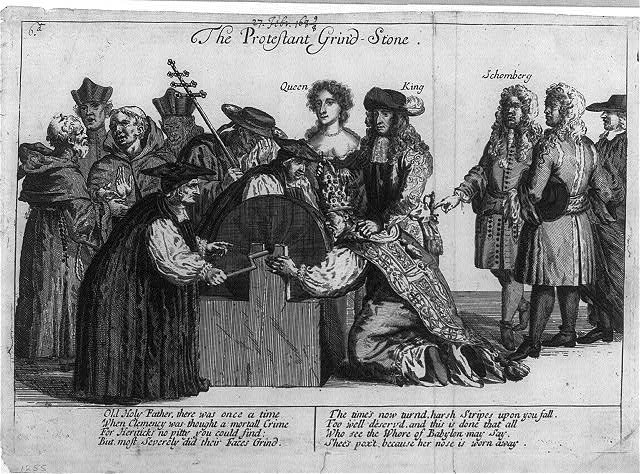
Next week, I’m going to take a completely different look and I feel here I should give you some forewarning because it’s going to get a little religious. My idea is that Dracula, if not overtly religious itself, is anti-Protestant. You may have already spotted a few areas here where that could be the case.
This is an area in which I have some experience, both personal and academic. I grew up Protestant and have since abandoned it for reasons which, if you know me personally, are equally personal. All I’ll say on that subject is that there is more than a little truth in some of the stories coming out of the exvangelical movement. Academically, I explored the Protestant Reformation within the bounds of Shakespeare’s Hamlet. I had not yet left, but Shakespeare, bless him, gave me what would become the blueprint for my way out.
If you spend enough time with Shakespeare, you quickly find he is definitely not someone you’d find at the local evangelical mega-church.
One blessing of the modern age is that we’re finally putting aside the Protestant mores and small-mindedness that have been inflicted upon our history books for hundreds of years at this point. There is much wrong with Rome, but they aren’t the anti-Christ or Devil Incarnate.
Medieval history is perhaps better understood now than it was even as little as 15 years ago and with that understanding, hopefully, will come a better appreciation for some of Stoker’s inspiration for Dracula. Because make no mistake, like Hamlet, there is a very distinctive anti-Protestant sentiment that runs through the narrative.
Don’t believe me? Well, go read Dracula for yourself and let me know what you think.
Sign up for my email newsletter and receive more updates on Vindico, being a virtual assistant, and more!
Discover more from K. B. Middleton, LLC
Subscribe to get the latest posts sent to your email.

 K. B. Middleton, LLC
In anticipation of next week 🙂 I don’t know about Dracula, but the 18th-century gothic thread you reference — Walpole (Otranto), Ann Radcliffe (Udolpho, The Italian, etc.), Matthew Lewis (The Monk) — seems to have emerged from the anti-Catholic sentiment of post-Stuart Hanoverian dynasty (Jacobite Rebellion, etc.). However, the signature trait of those gothic novels is not rejection of, but rather ambivalence toward, the Catholic (anti-Protestant) world view and its supernatural and mystical elements. That mystical hocus-pocus is the cultural breeding ground of the malevolent gothic villain, but the supernatural elements turn out to be true (except in Radcliffe) or at least they captivate the reader’s imagination in a way that the boring protestant-ish protagonists could never do. (Sorry for wordiness. Just very interested 🙂 )
LikeLiked by 1 person
Thank you! I hope I’ll be able to do it. Vindico is taking a lot of my time and energy these days! Hopefully, all the time I spent in college and in my own spiritual wanderings involving the Protestant vs Catholic question will make it easier.
Love your observations! Yes, there is a slight disjoint, but the cracks in Protestant thought are already there. When I initially looked at 18th century Gothic not long after college, it was a very underhanded feminist movement. Gothic fiction threw into sharp relief the general vulnerability of women because, once married, if not before, they had no legal identity. The constant peril in the novels reflected the general helplessness of women in a society that gave them no legal status.
Setting feminism aside, it’s not just boredom at work, it’s an innate recognition that there’s something slightly off. Wrong, even. The disastrous American and French Revolutions perhaps played a part there, as did the Napoleonic Wars. The so-called Age or Reason, just like the Puritan Age, burned out. There are more things in heaven, as Shakespeare says. And when reality is too much to bear, we need the supernatural, even the fantastical, to stay sane.
If you look at more recent history, it’s probably why my generation in particular loves The Lord of the Rings and Harry Potter books and movies so much. Lord of the Rings came out right after 9/11. Harry Potter took us straight through college and into our adult years. Same thing, really. Just a different style.
LikeLiked by 1 person
I love our discussions, Kathleen. Let my try to push the dialectic forward a little. In my readings, the injustice of women’s legal status you mention plays a big role in Austen but a lesser role in the gothic. In those early gothic novels, it wasn’t their legal status holding them back, it was overt male power, especially of the villains. And, I think in a quite unfeminist way, they relied on a powerful male ally to rise up and defend them. Characters like Ellena in The Italian have impressive qualities of their own, but gothic novels are driven by power, and it is usually male power. The heroines of the 18th-century gothic never quite have the power and skill to control outcomes in the same way as you’d see 100 years earlier in the sexually liberated, worldly heroines of Restoration comedy.
(Note: In Radcliffe’s “A Sicilian Romance” you get a specific variant of your “failed father” that DOES emphasize the unjust status of women – the father as blocking figure to his daughter’s marriage choice – but this is an old trope that goes back to Shakespeare’s plays and beyond – and it always validates the daughter’s point of view, so there is at least a potential element of feminism there.)
The French Revolution definitely impacted the British psyche in a special way, part of which I think was – on the aesthetic level – bringing more attention to an aesthetic of power as opposed that neoclassical Age of Reason aesthetic – a shift in attention in sync with the rise of Romanticism.
As far as supernatural and staying sane, I’ve often said of the mystical and the magical, “I don’t believe it, but I need it.” The roots of consciousness developed for a couple million years immersed in a world with presumable magic powers all around. Within the past 300 years, science has proven that factually incorrect, but you don’t undo the needs of a million-year-old structure like consciousness just by pointing out a fact 🙂
Sorry, I guess I’ve veered away from Dracula 🙂
LikeLiked by 1 person