
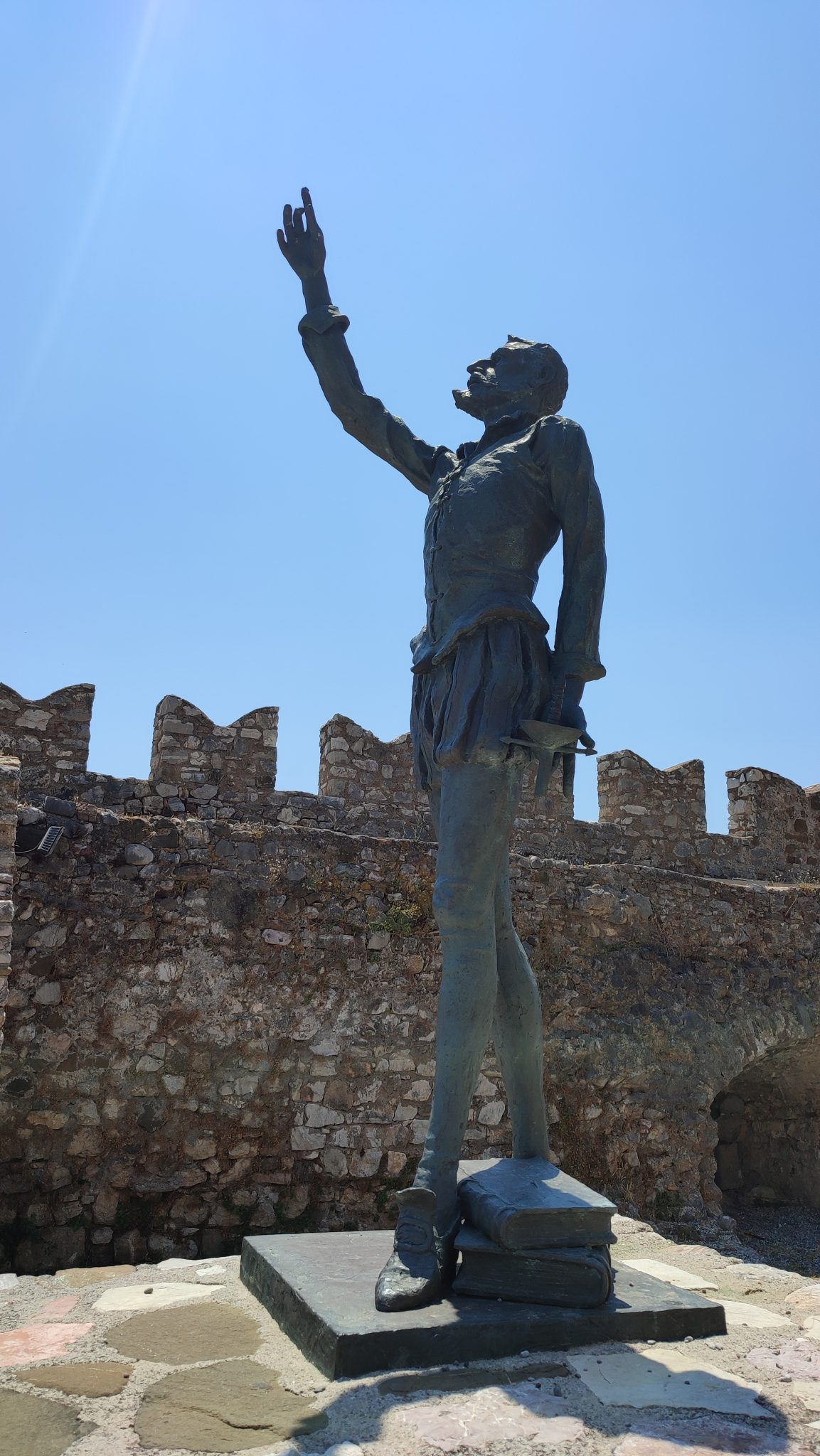
Miguel de Cervantes was part of a class I had in college. Within a couple of weeks, they expected a group of about 10 college students to read the entire novel and be able to discuss it with the rest of the class. This was a class where most of the “learning” was a group discussion in a circle of desks––a very obvious attempt at modern academic endeavor. And one which didn’t serve Don Quixote or my opinion of it. I learned nothing that made me want to read any more.
Back then, I wondered what the big deal was about this book. Of course, part of the “problem, “ if you can call it that, is that I have rarely ever agreed with my peers on anything. I was the little girl that dreamed of going to the opera and the ballet, of watching Shakespeare plays acted out, and of immersing myself in history.
I was always out of place, and I never quite fit in, however much I tried. At least, it always felt that way.
Thank God for Chef José Andrés, Jaleo, and Walt Disney. Because it was through exploring Spanish food and wine in Jaleo at Disney Springs that I revisited the idea of rereading Don Quixote.
Here’s been my experience so far.
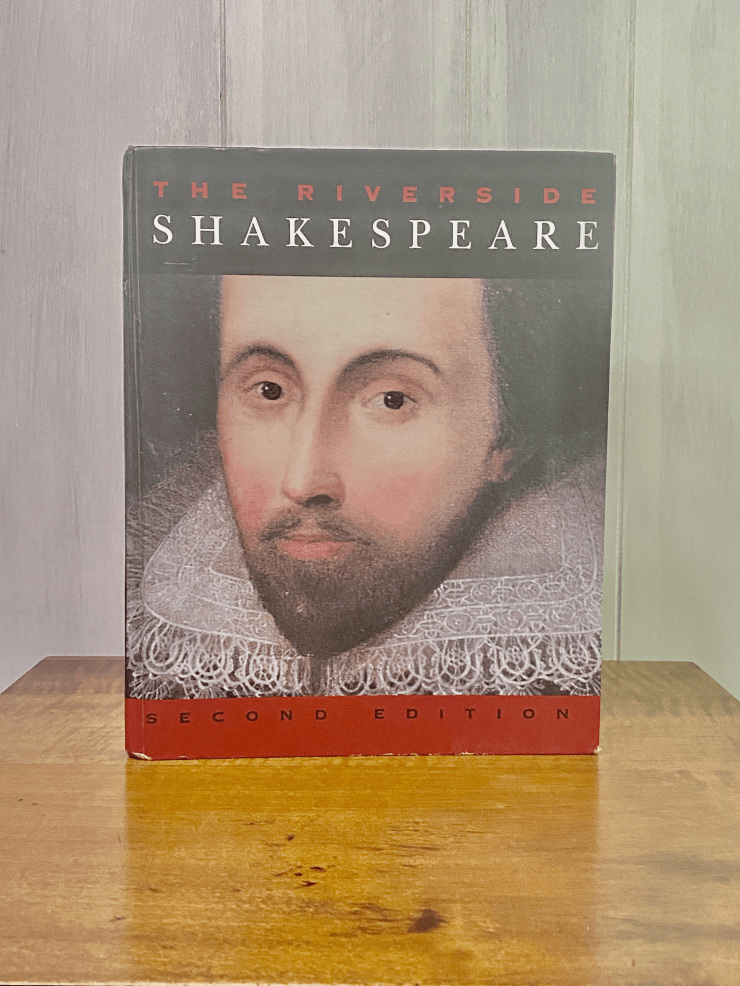
Knowing Shakespeare helps you know Cervantes
Miguel de Cervantes and William Shakespeare were contemporaries. They lived through many of the same history events, exposed to the same mindset and ideas, and both health with the increasing fallout of a world divided. They also were masters of saying more than you think they’re saying.
Shakespeare, for instance, often uses the idea of a person being “divided” inside. In fact, it’s one hallmark of all his great tragedies. When you see the character become “divided” in himself you know what’s about to happen. Macbeth’s loyalty to his own ambition becomes divided from his loyalty to his king. Othello’s insecurities divide his nobleness from his actions.
So, how does this help with Don Quixote?
We often think of Don Quixote as that story about a mad old man who attacks a windmill, claiming it’s a giant. But that’s not the entire story. It’s not even the point of the novel. And, have we actually considered whether the windmill was, in a sense, a giant? The modern use of wind farms and their devastating effects on the natural landscape, for any of their other benefits, certainly makes you wonder.
We reduce Don Quixote to nothing more than a story of fantasy gone wrong. An overaged, LARPing man who read too many chivalric romances, and it’s turned his brain. Almost eerily like Hamlet continuing to mourn his father long after his mother remarries, even though he’s called unmanly for doing so.
It makes you wonder, doesn’t it? We have Hamlet written off as a moody, broody, suicidal man who’s in love with his mother when those aren’t even key themes. Have we, in fact, done the same for Don Quixote de La Mancha?

Know Dante’s method of interpretation.
Dante Alighieri is another great literary master that can help you with Don Quixote. If William Shakespeare can help you see through the layers of meaning, Dante can actually give you an idea of what those layers are. Those layers are the literal, allegorical, moral, and anagogical.
- Literal Meaning-The most obvious meaning. Example: Don Quixote, in his madness, attacks a windmill.
- Allegorical Meaning-The literal is symbolic. Example: The windmill is allegorically a giant because the increased industrialization of the Renaissance world also led to a downfall of the virtues that made chivalry a force for good.
- Moral Meaning-The moral of the story, if you will. Example: There’s more to chivalry than acting out a chivalric romance.
- Anagogical Meaning-The spiritual meaning, or the positive effect of the moral meaning on the soul. Example: Chivalry is what the world needs, but it’s not what the world will accept.
Applying the four-fold interpretation method is far more complex than any modern or post-modern form of literary criticism out there. This isn’t the teacher asking you to read and then you having to give an opinion. This is you almost literally wrestling with the text.
It’s a little more robust but, after struggling with Don Quixote myself and re-reading it when I’m older, I can personally attest that you will get more enjoyment out of it if you consider Dante’s fourfold method.
The main characters aren’t always who you think they are.
Musicals like Man of La Mancha and even the title Don Quixote lead you to believe that the novel is all about the character of Don Quixote. Of course, while Sancho Panza isn’t in either title, he’s patently understood to be a main character.
And yet, there are entire sections of the book where neither character really plays a part. They become not the main character, but they become supporting characters. I’d even go so far as to say that Don Quixote has more in common with The Canterbury Tales or Decameron than it does with any of the later novelists who thought they were copying it.
Why? Well, there’s the main narrative of the Don Quixote and Sancho Panza, but there are other stories too. There’s Cardenio, the shepherdess, “The Tale of Inappropriate Curiosity,” and the captive’s tale, to name a few. This isn’t a primary narrative novel. This is a primary narrative with lots of side-quests.
Think of Shakespeare’s “play within a play” technique.

You can’t rush the reading.
I’ve said this before in different iterations, but I’ll say it again here for additional emphasis. Don Quixote is not a book to be rushed for a college class. It should be savored slowly, read at your own pace, and put aside when you’re bored. This is truly a piece of literature that requires digestion.
So, if you do have this on your reading list for the coming year, be that for school or for personal learning, don’t rush it. Start as far in advance as you can and take it leisurely.
Preferably with some good Spanish wine and cheese.
The experience perspective
The old adage that experience comes with age is true. But it’s especially true of classic literatur. Books are there to be enjoyed, not just studied and discussed in a classroom. So, if you only associate a classic work like Don Quixote with your school days, and those days weren’t the best experience, then you are missing out.
We think that once we’re out of school that we can just be content with a Jack Reacher novel or a Nora Roberts romantic thriller. Well, yes, you can just read popular literature and nothing else. Popular literature has its place in our lives.
Lee Child and Nora Roberts are bestsellers with good reason and it isn’t because there’s anything cheap or low quality about either writer. They’re excellent writers and, given how each has started trends of their own, we may even consider them classic writers one day.
Let’s not forget that Alexandre Dumas was a popular writer too. So was Shakespeare.
You understand things better a decade later. When you live to see the world change three or four times in your life, you understand Don Quixote’s madness, perhaps a little better. I’m an “elder” millennia—I’ve been through four decades, seen the end of the Cold War, watched the Yugoslav breakup, experienced 9/11/01, the ’08 crash, the rise of smartphones, and the ’20 pandemic. That’s a lot of major changes just on the global scale.
Live through that much, and going off to be a knight starts looking pretty good. Even understandable. But not some kind of existential crisis that had little meaning, as, from what I remember of that college class, most of my peers claimed.
So, give this mammoth of a book a chance!
Special content just for newsletter subscribers!
Also, if you enjoyed this post and want more tips on reading the really enormous books like Don Quixote, make sure you sign up for my newsletter. I have a couple of different methods of tackling more difficult books like Don Quixote, which I’m only going to share through my mailing list!
Processing…
Success! You're on the list.
Whoops! There was an error and we couldn't process your subscription. Please reload the page and try again.
Discover more from K. B. Middleton, LLC
Subscribe to get the latest posts sent to your email.

 K. B. Middleton, LLC